Free guide · For Gas Safe engineers
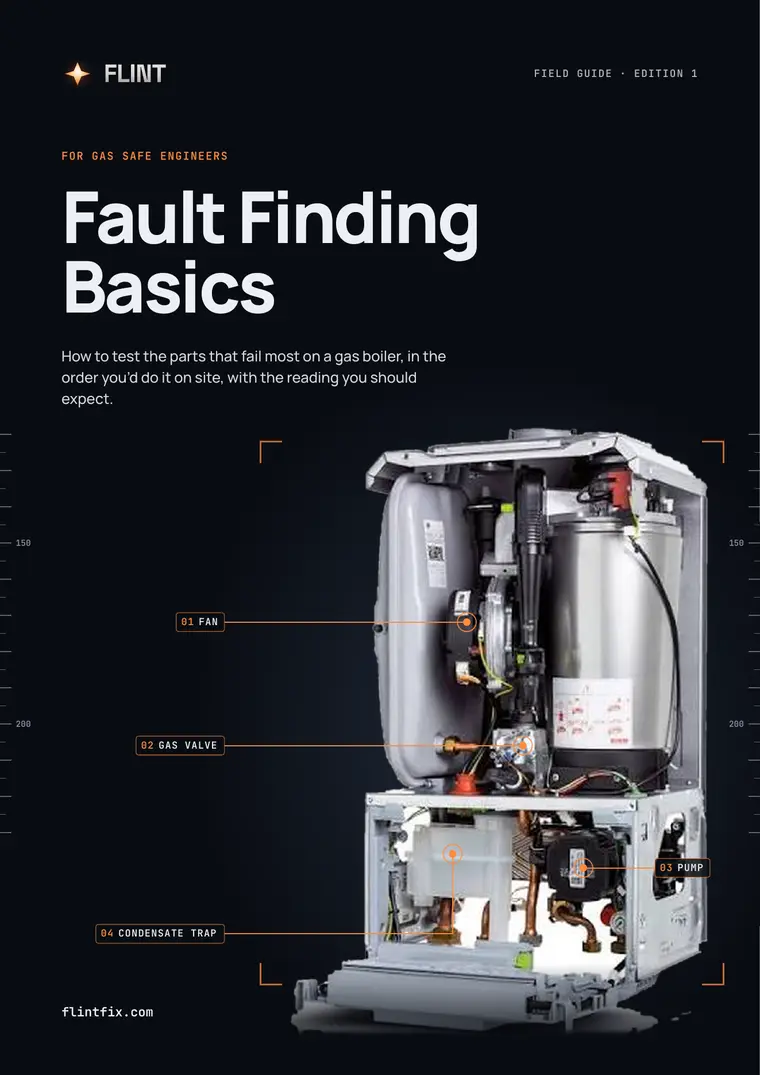
Fault Finding Basics
How to test the parts that fail most on a gas boiler, in the order you'd do it on site, with the reading you should expect.
26 pagesPDFFree
What's inside
Do chapter 1 first. Then go straight to the test you need.
01
Before you startSafe isolation, proving dead and locking off. Before every test.
02
Your multimeterWhich setting for which test, and the mistakes that blow a fuse or a meter.
03
How a combi worksWhat happens, in order, on a heating call and on a hot water call.
04
The five tests that find most faultsNTC thermistor, fan, pump, gas valve, and ignition with flame sensing.
05
No heating, no hot water, or neitherA flowchart that starts from what the customer tells you.
06
Y plan and S planHow the lives run, what to check first, and each one wired at a wiring centre.
07
How old is this boiler?Reading the year of manufacture off the serial number.
08
Gas safety checkThe one-page checklist, and the tightness test under Edition 4.
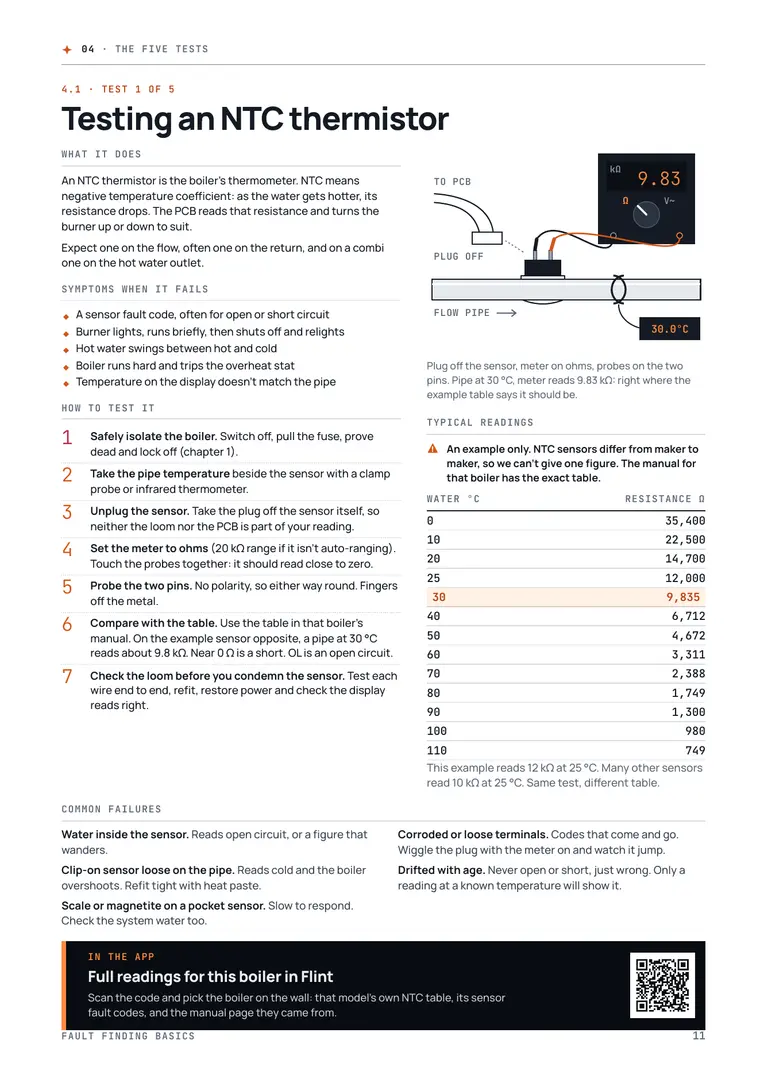
How a test page reads
The same layout every time.
You always know where the readings are.
What the part does, and the symptoms when it fails.
The test in numbered steps, from isolating the boiler to checking the loom.
A worked reading and an example table, marked as an example. The manual for that boiler has the exact figures.
The common failures, and a code that opens that boiler in Flint.
Fault Finding Basics is for competent, registered gas engineers. The figures in it are examples to show the method: always check the manufacturer's manual for the boiler in front of you. It's the first part of the Flint Field Guide, which has all 56 chapters and a video for every test.