The Flint Field Guide
Every test on a gas boiler, in the order you'd do it.
The full guide behind Fault Finding Basics. From safe isolation to the annual service, each test with the reading you should expect and a short video of it being done.
PDF to download, plus every chapter and video on learn.flintfix.com with the same Flint login.
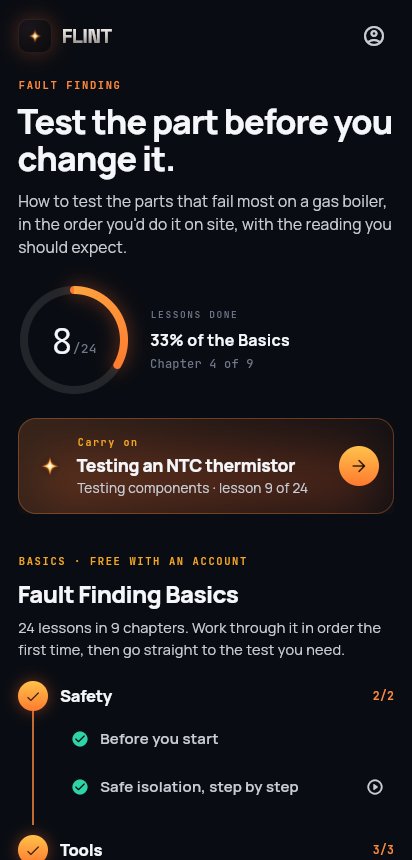
What you'll learn
What you'll be able to do.
- Test every component on a boiler, and know what the reading means.Fans, pumps, gas valves, NTCs, pressure switches, ignition and flame sensing, diverter valves and PCBs. The meter setting, the steps, and the reading that says good or bad.
- Understand how a heating system works.Combi, system and heat-only side by side, and the order things happen in from a call for heat to a lit burner.
- Get from what the customer tells you to the part that's failed.No hot water, heating too hot, locking out, a noisy boiler, losing pressure. Start from the symptom and work down.
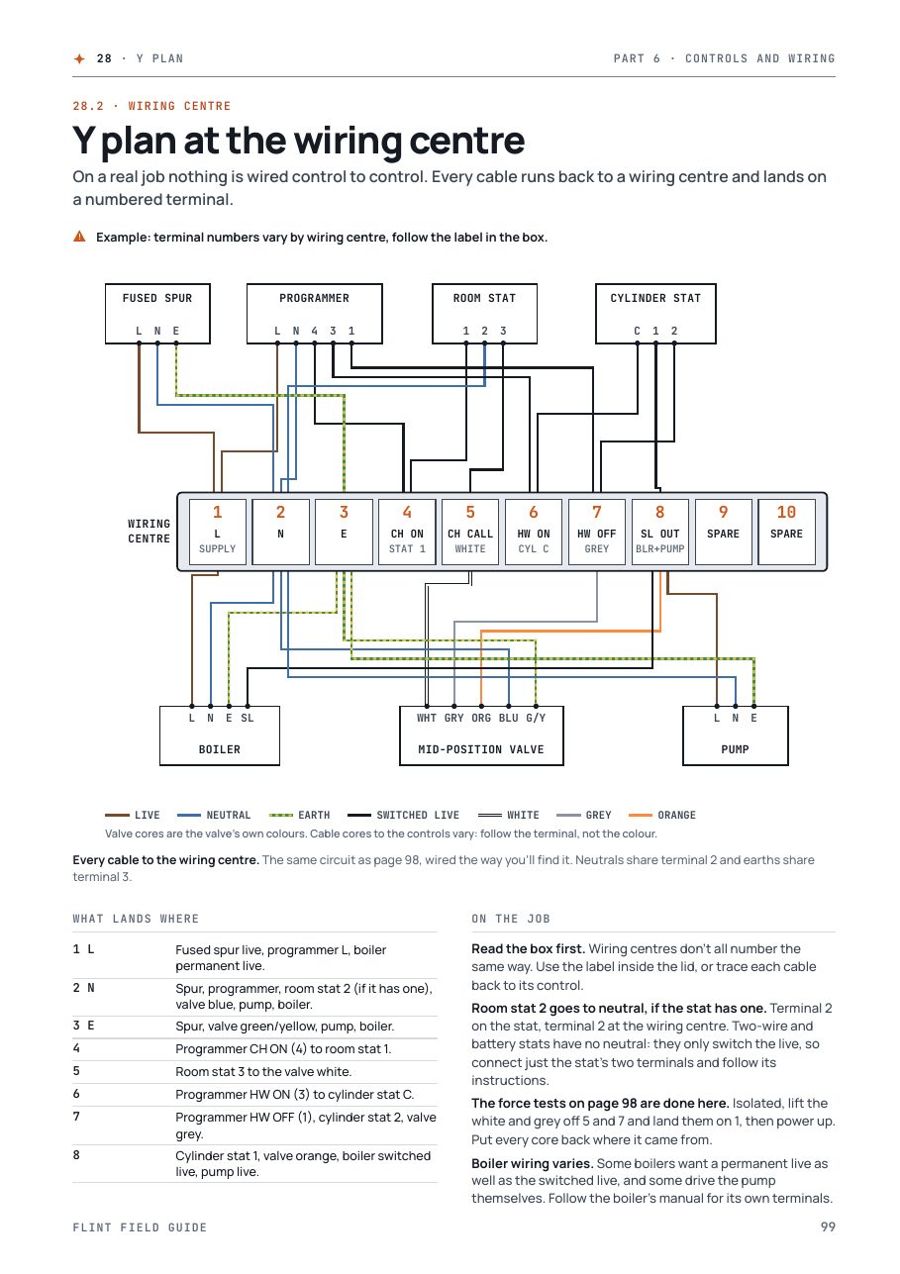
- Read the controls and the wiring.Y plan and S plan at the wiring centre, zone valves, room and cylinder stats, wireless and smart controls, and swapping a programmer.
- Do the gas safety checks and fill in the record.Tightness test and purging, standing and working pressure, gas rate, ventilation, flue and analyser checks, and what to do when it's unsafe.
- Service a boiler and set it up right.The annual service step by step, combustion and CO2 settings by make on NG and LPG, getting a condensing boiler to condense, system water and the G3 checks on an unvented cylinder.
- Find your way round the makes you'll meet most.Worked examples on Vaillant, Worcester, Baxi and Potterton, Ideal, Glow-worm and Alpha.
On the plate
What you get, read off the plate.
- Chapters
- 56
- Parts
- 9
- Pages
- 199
- Videos
- 76
- Format
- PDF + lessons online
- Covers
- Combi, system and heat-only, gas
What's inside
Nine parts, in the order a job runs.
Safety first, then the meter, how the boiler works, and one part at a time after that. Open a part to see its chapters.
01Safety firstSafe isolation, electrical checks, unsafe situations, combustion limits and asbestos. Read this part before the rest.5 chapters
- 1Safe isolation
- 2Electrical safety checks
- 3Unsafe situations: ID and AR
- 4Combustion checks and action levels
- 5Asbestos in older boilers
02ToolsThe meter you will use on every test, and what else goes in the van.2 chapters
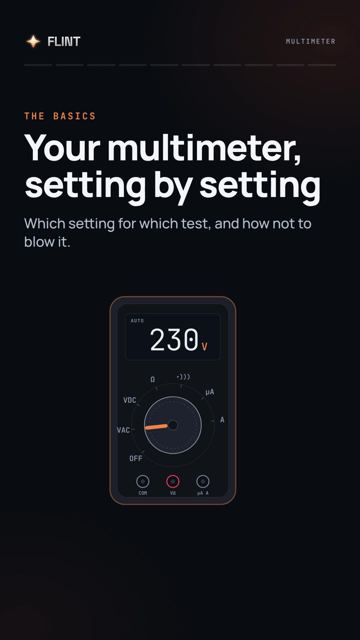
- 6The multimeter
- 7Kit list
03How the boiler worksWhat each type of boiler does, and the order things happen in when one lights.2 chapters
- 8Combi, system and heat-only compared
- 9Sequence of operation
04Testing componentsOne part at a time: what it does, how it fails and how to prove it before you replace it.12 chapters
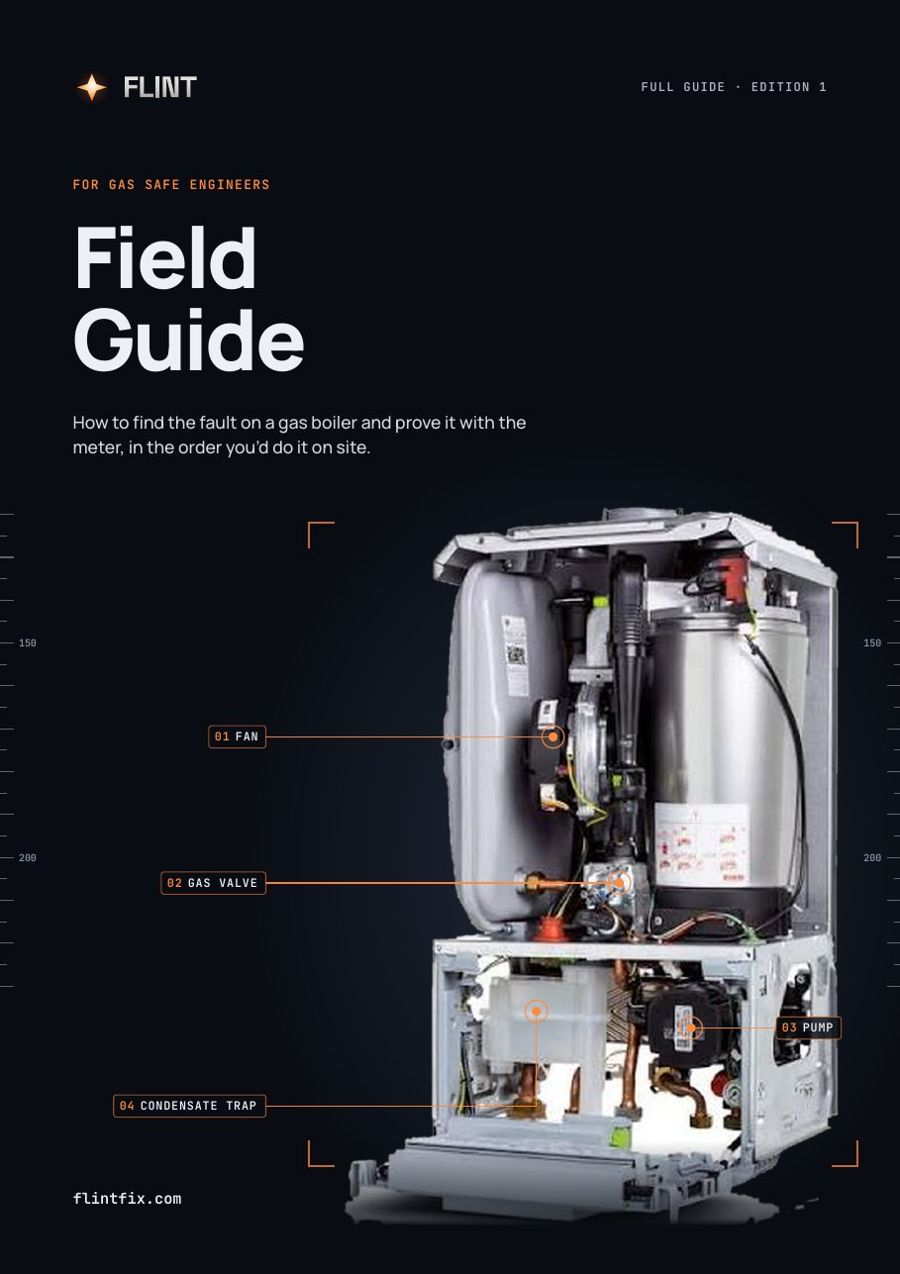
- 10Fans, fan speed, fan pressure
- 11Pumps, dating a pump
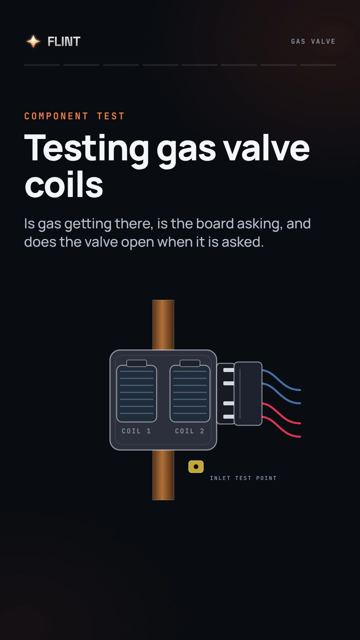
- 12Gas valves, solenoids, modulation
- 13Thermistors and NTC
- 14Potentiometers
- 15Overheat and limit stats
- 16Air pressure switches
- 17Flow switches, turbines, microswitches, low pressure switches
- 18Ignition and flame sensing
- 19Diverter valves and motor heads
- 20PCBs
- 21Plate heat exchangers, PRVs, condensate traps
05Fault finding by symptomStart from what the customer tells you and work down to the part.6 chapters
- 22No heating, no hot water, or neither
- 23Hot water too hot or not hot enough
- 24Heating too hot or not hot enough
- 25Won't light or keeps locking out
- 26Noisy boiler
- 27Losing or gaining pressure
06Controls and wiringY plan, S plan, zone valves, stats, smart controls and swapping a programmer.6 chapters
- 28Y plan
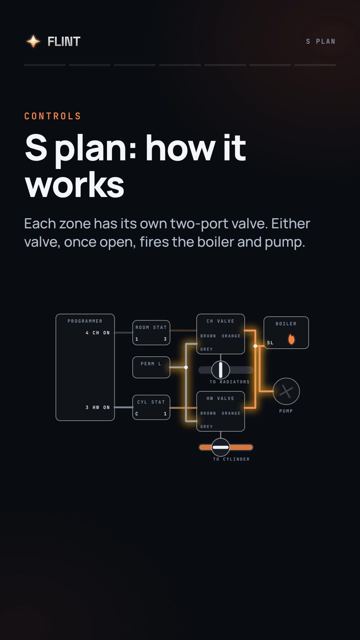
- 29S plan
- 30Zone valves, synchron motors, dating a valve
- 31Wired room and cylinder stats
- 32Wireless and smart controls
- 33Swapping a programmer
07Make by makeWorked examples from the makes you will meet most. The full codes for each model stay in Flint.6 chapters
- 34Vaillant
- 35Worcester
- 36Baxi and Potterton
- 37Ideal
- 38Glow-worm
- 39Alpha
08Gas safety and servicingWhat to check, what to measure and what to write down, from the tightness test to the annual service.16 chapters
- 40Before you go: scope, kit, paperwork
- 41Meter and pipework, tightness test, purging
- 42Standing and working pressure, gas rate
- 43Ventilation
- 44Flues, spillage test, analyser checks
- 45Appliance by appliance
- 46Safety devices and CO alarms
- 47When it's unsafe: ID, AR, notices
- 48Filling in the gas safety record
- 49Where new engineers get stuck
- 50The annual service, step by step
- 51Combustion and CO2 settings by make, NG and LPG
- 52Getting a condensing boiler to condense
- 53System water: flushing, filters, inhibitor
- 54Unvented cylinders: the G3 checks
- 55LPG notes and inlet pressures
09Reference tablesDating a boiler, GC numbers, thermistor tables and the other pages you will want to find fast.1 chapter
- 56Reference tables
Inside the book
Laid out the way you work at the boiler.
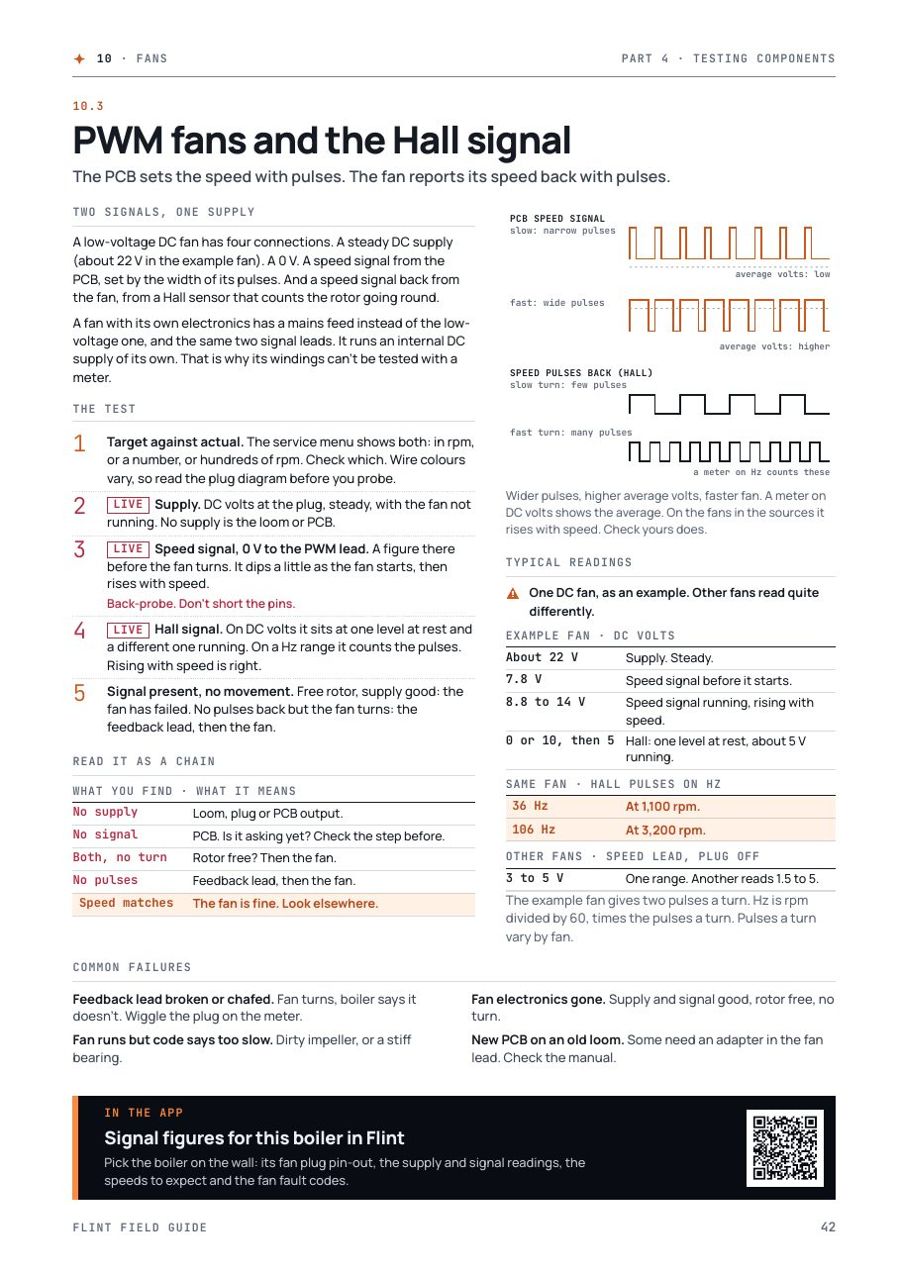
Every test page runs the same way: what the part does, how it fails, the test in numbered steps, and the readings to expect. Steps done with the power on are marked LIVE.
The videos
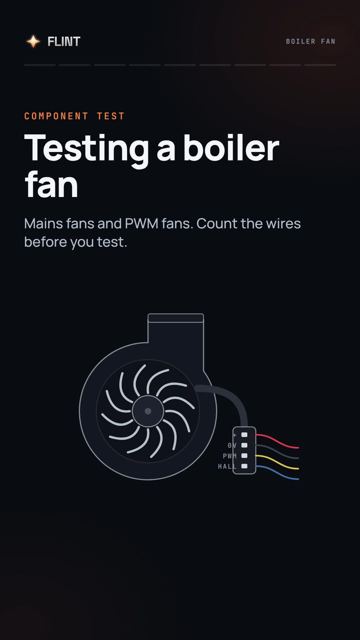
See the test done, then do it.
Short videos made from the same steps as the page, so the video and the book never say different things. Watch one in the van before you go in.
Two places, one login
The guide teaches the method. Flint has the boiler's own figures.
learn.flintfix.com
Work through it in order
Every chapter and its videos, a tick when you've done it, and the next one waiting. Pick it up on your phone where you left off on the laptop.
The Flint app
Then look up the boiler on the wall
The guide gives typical readings to show the method. Flint has that model's own figures, its fault codes and the manual page they came from.
Where the figures come from
Checked before it's printed.
Manufacturers' manuals and the published standards. Where something is a trade tip rather than a rule, the guide says so.
CheckingEvery gas safety figure is checked against its source before it goes in. A chapter waits until its figures are signed off.
ExamplesWhere a reading varies from one manufacturer to the next, the guide says so and shows one labelled example. The manual for the boiler in front of you always wins.
Basics or the full guide
Start free. Go the whole way when you're ready.
| Fault Finding Basics | Flint Field Guide | |
|---|---|---|
| Price | Free | £97, one payment |
| Access | With a free Flint account | Unlimited, with every update |
| Chapters | 9, with 24 lessons | 56 |
| Component tests | The five that find most faults | Every part, one at a time |
| Videos | 8 | 76 |
| Controls and wiring | Y plan and S plan | Zone valves, stats, smart controls, swapping a programmer |
| Gas safety and servicing | The checklist and the tightness test | The whole of Part 8 |
Questions
Before you buy.
Do I need a Flint subscription?
No. The guide is a product on its own. You sign in to the lessons with a Flint account, which costs nothing to make. If you already use the Flint app, it's the same login.
How long do I have it for?
For good. One payment of £97, no subscription and nothing to renew.
Do I get updates?
Yes, all of them, at no extra cost. When a chapter is added or a figure changes, the lessons online change with it and you can download the new PDF.
Is there a printed copy?
No. The guide is a PDF you can download and print yourself, and every chapter is online with its videos at learn.flintfix.com.
Can I use it on site?
Yes. The lessons work on any phone in a browser, signed in with your Flint login. Download the PDF too, for when there's no signal.
Who is it for?
Competent, registered gas engineers. It explains how to find a fault and prove it. It doesn't replace your training, your registration or the manufacturer's instructions.
Can I get a refund?
It's a digital product, so once you've opened a lesson from the full guide or downloaded the PDF, we can't take it back and there's no refund for changing your mind. You'll be asked to agree to that at checkout, before you get access. If you haven't opened any of it, you can cancel within 14 days of buying for a full refund. And if something's wrong on our side, say you've paid and can't get in, or it isn't what this page describes, email support@flintfix.com and we'll put it right or refund you.
I already have Fault Finding Basics. Is it the same?
Basics is the first part of it, given away free. The full guide covers the rest of the boiler, the controls and Part 8 on gas safety and servicing.
The Flint Field Guide
Test the part before you change it.
A part fitted on a guess is the dearest test there is.
The Flint Field Guide is for competent, registered gas engineers. The figures in it are examples to show the method: always check the manufacturer's manual for the boiler in front of you.